

What to Check Before Ordering a Pad-Mounted Transformer
October 7, 2026Installing a pad-mounted transformer requires careful planning, especially when the concrete pad and underground cables are already in place.
Problems can arise when the transformer arrives with cable connections on the wrong side, insufficient clearance around the cabinet, or a voltage configuration that does not match the electrical system. These issues often come down to details that were not fully addressed during the specification process.
Before ordering a pad-mounted transformer, it is important to review the site layout, electrical requirements, and installation conditions. Getting these details right early can help avoid expensive changes during installation.
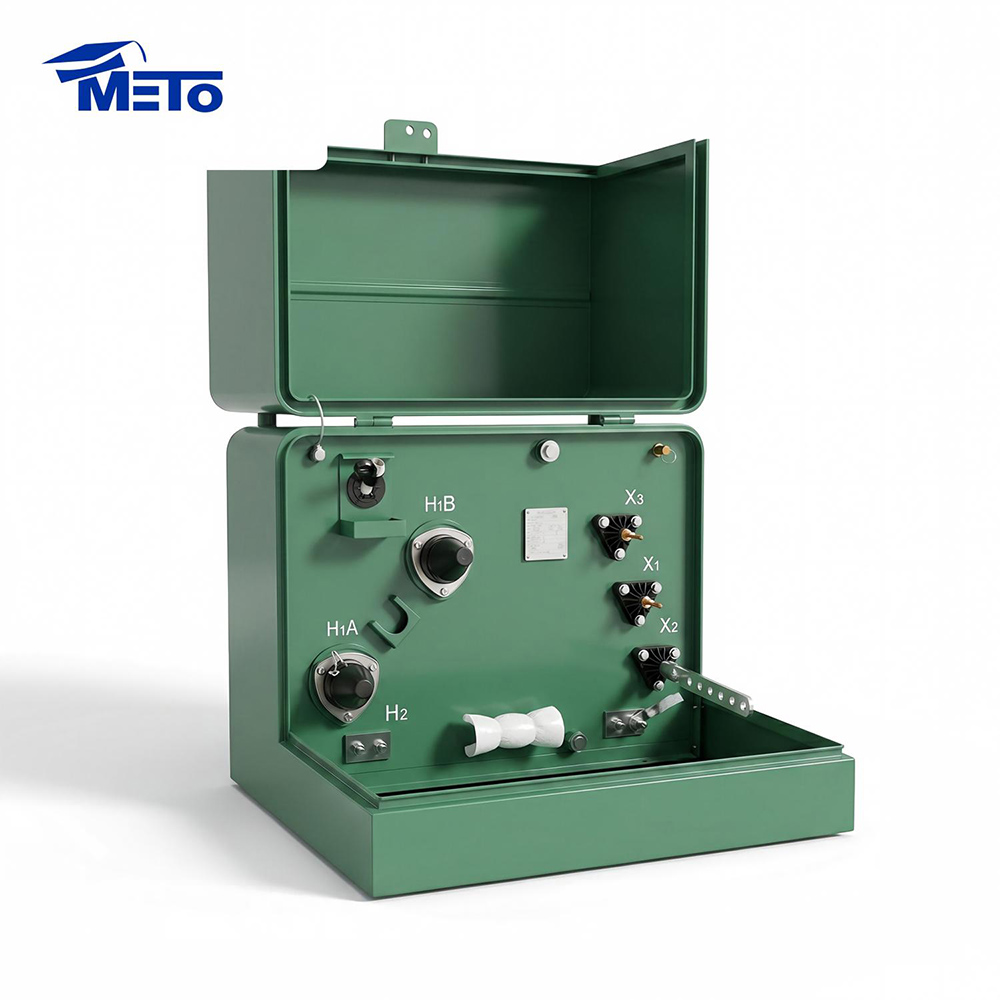
Start with the Site Layout
The transformer needs to fit the space available on site, including the concrete pad, underground cable routes, and surrounding equipment.
Check where the primary cables enter the cabinet, how much room is available for cable bends, and whether the doors can open fully without interfering with bollards, fences, or nearby structures.
Access for future maintenance also matters. Utility crews need enough working space to inspect the equipment, operate switches, and replace components when necessary.
It is worth reviewing the site drawings before choosing a transformer from a product catalog. A standard cabinet arrangement may not match the cable entry locations or space restrictions of a particular installation.
Pay particular attention to the primary cable route and the required operating clearances. These are much easier to address during planning than after the pad has been poured and the underground conduits installed.
Check the Primary Voltage and Connection Requirements
The transformer’s primary connection must match the electrical distribution system it will be connected to.
Start by confirming the primary voltage, number of phases, and required winding connection. The utility’s distribution arrangement also determines whether the transformer needs a radial or loop-feed configuration.
Fault current and protective device coordination should be reviewed as part of the electrical design. The transformer and its associated equipment must have suitable ratings for the available fault conditions, while upstream protection needs to operate correctly during a fault.
For more information on protective device selection, see our guide to matching a fuse cutout to a distribution transformer.
The insulation rating is another detail worth confirming. It should be selected according to the distribution system’s voltage class and applicable utility requirements, rather than based on the connected load alone.
Make Sure the Secondary Configuration Matches the Load
On the secondary side, the transformer must provide the voltage and connection arrangement required by the equipment it serves.
A three-phase, four-wire distribution system, for example, has different requirements from a single-phase service. These differences affect the transformer winding configuration and available connections.
The number and arrangement of secondary cable connections also need attention. Multiple outgoing circuits may require additional termination space, which can influence the internal cabinet layout and dimensions.
For installations with a combination of single-phase and three-phase loads, it is worth comparing different transformer arrangements before making a decision.
Depending on the load profile and distribution layout, several smaller transformers may be more suitable than one larger unit. Our single-phase pad-mounted transformers are one option to consider where the electrical requirements allow.
The final choice should account for connected load, expected demand, voltage requirements, and the way power is distributed across the site.
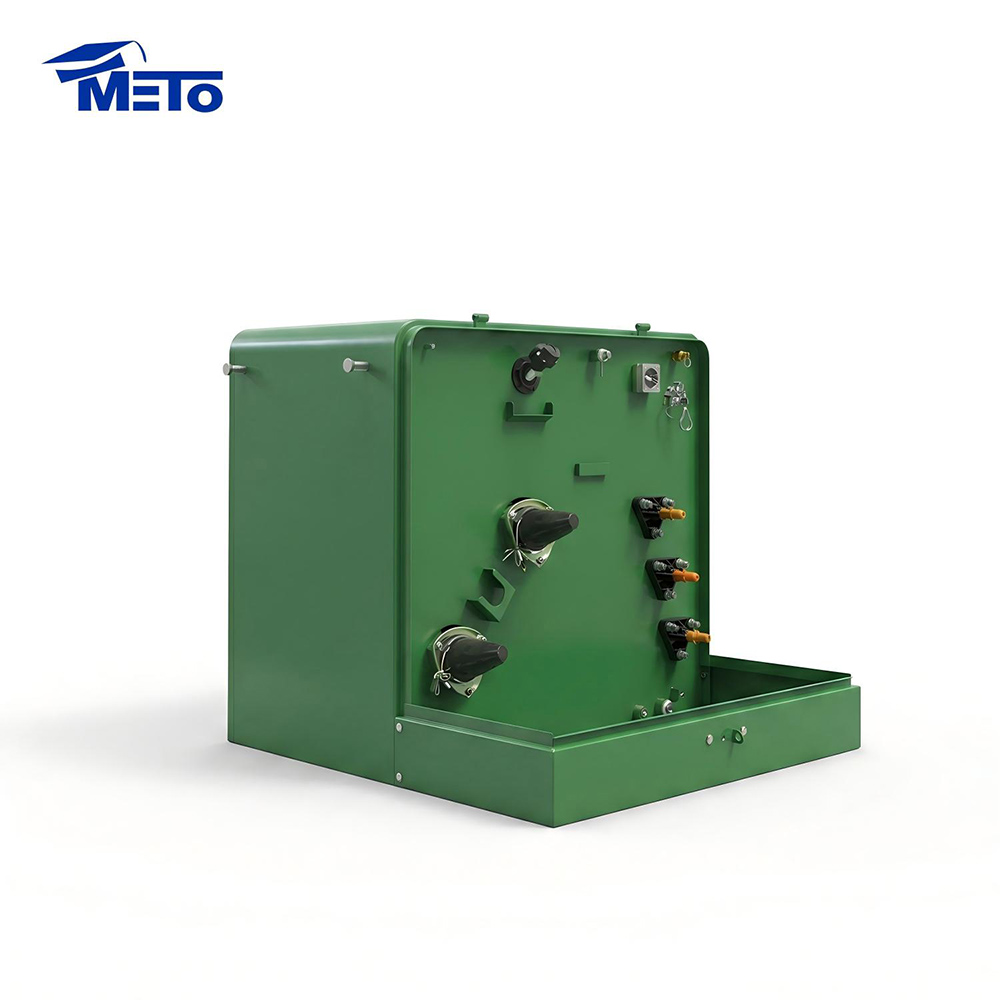
Consider the Enclosure and Installation Environment
Pad-mounted transformers are designed for outdoor installation, but site conditions can vary considerably.
A transformer installed near a coastal area may face greater corrosion exposure, while one placed beside a road may be exposed to de-icing salts, standing water, or accidental contact from vehicles and maintenance equipment.
The enclosure needs to provide suitable protection for the conditions expected at the installation site.
The pad-mounted transformers offered by CHINAMETO feature thickened steel enclosures with a corrosion-resistant green powder-coated finish. The enclosure is designed to help protect internal components from moisture, corrosion, and physical damage during outdoor service.
The concrete pad and surrounding drainage are just as important as the cabinet itself. Water should drain away from the transformer rather than collect around its base.
Before installation, confirm the pad dimensions, mounting arrangement, cable openings, and required clearances against the approved transformer drawings. This helps ensure the delivered unit fits the prepared foundation without field modifications.
| Item | Answered by the Site Drawing | Not Answerable from a Datasheet |
|---|---|---|
| Cable entry side and sweep | Duct bank route and bend radius | One cabinet serves several entry options |
| Door swing and clear space | Bollard, curb, and access path | Hinge side is a build choice |
| Pad drainage | Finished grade and slope | Water resistance is not water shedding |
| Load to be served | Service exits and downstream equipment | A rating says nothing about duty cycle |
| Review basis | Network owner submission template | A standard family alone does not settle it |
What Utilities Look for When Reviewing Transformer Specifications
If a pad-mounted transformer will be connected to a utility distribution network, the utility may need to review its specifications before approving the installation.
The review typically covers the applicable design standards, factory test documentation, nameplate information, and installation drawings. These documents help the utility confirm that the transformer meets its technical requirements and can be installed safely within the existing distribution system.
The drawing package should show the transformer dimensions, concrete pad layout, cable entry locations, and required access clearances. Nameplate details are also important because utilities use them to identify and maintain equipment throughout its service life.
CHINAMETO offers a range of distribution transformers for overhead and underground power systems. When preparing a submission, check the utility’s documentation requirements early so the necessary drawings and technical information can be included from the beginning.
Should You Get Utility Approval Before Ordering?
For transformers connecting to a utility-owned distribution network, it is generally best to confirm the approval requirements before placing an order.
Different utilities have different review procedures. Some require approval of the transformer drawings, while others may also request factory test reports, equipment specifications, or additional technical documentation.
Ordering a transformer before completing the required review can create problems if the utility requests changes to the electrical configuration or cabinet layout.
Ask the utility or project engineer which documents need approval and whether the transformer can be released for manufacturing before that approval is received.
If the installation includes an upstream disconnect or visible isolation point, that equipment may also be part of the review. Our guide to isolating and disconnect switches for overhead lines explains the main considerations when specifying this type of equipment.
What to Include in a Pad-Mounted Transformer RFQ
A clear request for quotation (RFQ) helps the manufacturer understand your electrical requirements and provide a suitable transformer configuration.
Before requesting pricing, prepare the following information:
It is also helpful to provide a site layout or installation drawing, particularly when the transformer must fit an existing concrete pad or underground cable arrangement.
The more complete the information, the easier it is for the manufacturer to prepare an accurate quotation and identify any details that need clarification before production.
Final Checks Before Ordering a Pad-Mounted Transformer
Before approving a transformer for production, make sure the final specifications match the electrical design and site installation drawings.
Pay particular attention to the primary and secondary connections, cabinet dimensions, cable entry locations, and required working clearances. These details can be difficult and expensive to change once the concrete pad and underground conduits are in place.
The approved transformer drawings should also match the information on the purchase order. This helps prevent differences between the equipment specified by the engineering team and the unit ultimately supplied to the project.
CHINAMETO manufactures single-phase and three-phase oil-immersed pad-mounted transformers for underground distribution applications. We can review your electrical requirements and installation details to help identify a suitable configuration.
For projects that also require primary-side protection equipment, explore our fuse cutout configurations or contact our engineering team to discuss your transformer specifications.

--- END ---
In this blog
Latest Articles


Newsletter
Never miss an update by signing up to our newsletter.