

Plug-In Circuit Breakers in North American Electrical Panels
October 16, 2026Plug-in circuit breakers are widely used in residential and light commercial electrical panels across North America. They provide a convenient way to connect branch circuits to a panelboard without bolting the breaker directly to the bus.
However, not every plug-in breaker is compatible with every panel. Even when two breakers have the same ampere rating and appear similar, differences in bus connections and mounting designs can prevent them from being used interchangeably.
Understanding how plug-in breakers connect to the panel and how they are secured in place can help you select the correct replacement and avoid installation problems.
How Plug-In Circuit Breakers Work
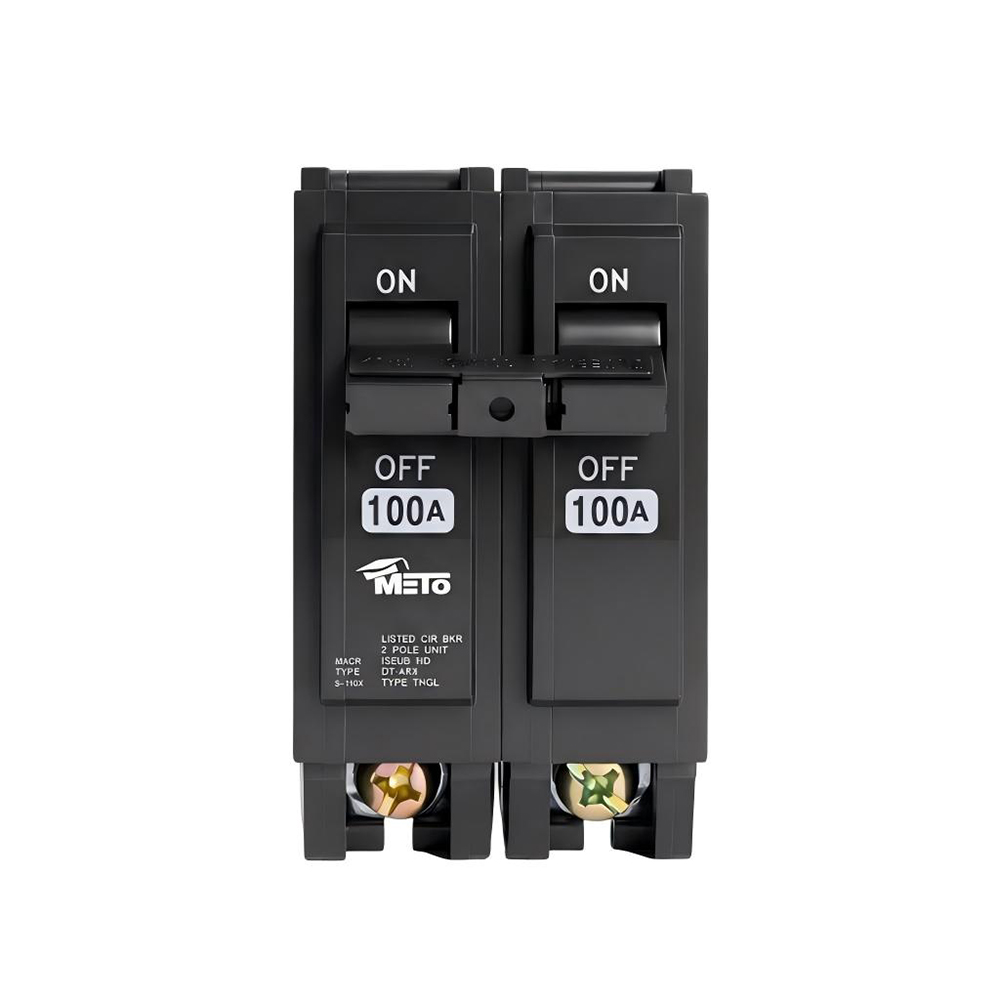
A plug-in circuit breaker connects to the panel’s busbar through spring contacts, commonly referred to as breaker jaws or clips. These contacts grip the designated bus connection when the breaker is installed.
The branch circuit conductor connects to the breaker’s load terminal, usually through a screw-type or other manufacturer-specified terminal.
Unlike bolt-on breakers, plug-in models don’t require a bolted connection between the breaker’s line terminal and the busbar. Instead, they rely on a properly designed contact interface and the panel’s specified mounting arrangement.
Breaker Contacts and Busbar Compatibility
The contact design must match the busbar configuration of the panel.
Different manufacturers and panel series may use different bus connection dimensions, contact arrangements, and mounting features. As a result, a breaker designed for one panel may not be approved for use in another, even if the voltage and current ratings are the same.
An improper connection can increase contact resistance and lead to overheating or damage.
When replacing a breaker, check the panel labeling and the manufacturer’s compatibility information rather than relying on the breaker size or brand name alone.
How Plug-In Breakers Are Secured
Plug-in breakers are held in their intended position by the mounting features designed into the breaker and panel assembly.
Depending on the panel design, these may include mounting rails, hooks, retaining features, or other manufacturer-specified components.
Some applications, such as back-fed main breakers, may also require an approved retaining kit to prevent the breaker from being removed without additional steps.
The deadfront cover provides protection against contact with energized components, but it should not be assumed to be the primary means of securing a breaker unless the listed assembly is specifically designed that way.
Always follow the panel manufacturer’s installation instructions and use only breakers identified as suitable for the equipment.
How plug-in mounting differs from bolt-on
The two schemes solve the same problem with different hardware.
| Item | Plug-In | Bolt-On |
|---|---|---|
| Line connection | Jaws grip a bus stab | Fastener into a bus bar |
| Retention | Deadfront or clip | Threaded fastener through the case |
| Torque check | None at the line side | Required at each pole |
| Removal | Cover off, breaker lifts out | Fastener backed out first |
| Pressure set by | Jaw geometry | Fastener torque |
Contact pressure and heat
A bolted joint is set with a torque wrench and stays where it was put. A jaw connection is judged by insertion force and by the condition of the stab. Heat at the jaws usually means a stab reused too often or oxidized.

Choosing a Breaker for a 120V Branch Circuit
In North American residential and light commercial electrical systems, a typical 120V branch circuit uses one ungrounded (hot) conductor and one grounded (neutral) conductor, with a single-pole circuit breaker providing overcurrent protection.
The breaker disconnects the hot conductor when it trips, while the neutral normally connects to the panel’s neutral bar.
CHINAMETO’s MHQL1 single-pole plug-in circuit breakers are available in 10A, 15A, and 20A ratings. Before selecting a model, confirm its suitability for the panel and the circuit’s electrical requirements.
Single-Pole Breakers and Neutral Connections
A standard single-pole breaker opens one ungrounded conductor. The neutral is normally connected separately and isn’t switched by the breaker.
Circuits that use two ungrounded conductors, such as many 240V loads, generally require a two-pole breaker or another approved means of simultaneous disconnection.
Some circuits also require additional protection, such as GFCI or AFCI, depending on their application and the applicable electrical code.
Selecting the Correct Breaker Amperage
Breaker amperage should be selected according to the circuit conductors, connected load, and applicable electrical code requirements.
For example, 15A and 20A breakers are commonly used on residential branch circuits, but the correct rating depends on the conductor size, insulation, and installation conditions.
Installing a higher-rated breaker without confirming the conductor’s allowable ampacity can leave the wiring inadequately protected.
When adding a circuit or replacing an existing breaker, verify the conductor specifications rather than assuming the previous breaker rating was correct.
Where Plug-In Circuit Breakers Are Commonly Used
Plug-in circuit breakers are commonly found in residential load centers and certain light commercial panelboards designed for this mounting arrangement.
They’re often used when adding a new branch circuit to an existing compatible panel or replacing a breaker during electrical maintenance.
Plug-in designs can also be found in some temporary power distribution assemblies, provided the equipment is designed and approved for those devices.
For commercial renovations, plug-in breakers may offer a convenient way to modify branch circuits without changing the entire panel. However, the breaker must still be suitable for the specific panelboard.
Adding a Breaker to an Existing Panel
Before adding a new circuit, confirm that the panel has an available breaker position and sufficient electrical capacity for the additional load.
The replacement or additional breaker must be identified as suitable for the panel, including its mounting arrangement, voltage rating, and interrupting rating.
CHINAMETO’s circuit breaker range includes different configurations for low-voltage distribution applications.
Breaker installation should be carried out by qualified electrical personnel following the panel manufacturer’s instructions and applicable electrical codes.
Safety During Panel Maintenance
Plug-in mounting can simplify certain installation and replacement tasks, but it doesn’t eliminate the electrical hazards inside a panel.
Even when a branch breaker is switched off, other parts of the panel may remain energized.
Electrical work should normally be performed with the equipment properly de-energized, isolated, and verified safe using appropriate procedures. Energized work should only be undertaken when justified and permitted under applicable safety requirements.
When Plug-In Breakers Are Not Suitable
A plug-in breaker shouldn’t be installed in a panelboard designed exclusively for bolt-on breakers unless the equipment manufacturer specifically identifies an approved arrangement. Panel compatibility involves more than whether the breaker physically fits. The bus connection, mounting features, and equipment listing must all be considered.
The breaker’s interrupting rating must also be appropriate for the available fault current at the installation point, taking into account any applicable series-rated combination or other approved system arrangement.
Damaged busbars, missing mounting components, or an incomplete deadfront assembly are additional reasons to stop and inspect the panel before installing a breaker. If the enclosure or its internal components are damaged, the issue should be addressed according to the manufacturer’s requirements rather than attempting to secure a breaker through an improvised repair.
Understanding Plug-In Circuit Breaker Ratings
When selecting a plug-in circuit breaker, the ampere rating is only one of several specifications to check. Voltage rating, number of poles, interrupting capacity, and the breaker’s time-current characteristics all affect whether it is suitable for a particular circuit. The panel manufacturer’s compatibility information and the breaker’s product markings should be reviewed together.
Interrupting Rating and Available Fault Current
The interrupting rating indicates the maximum prospective fault current that a circuit breaker is rated to interrupt under specified test conditions. Two breakers may have the same 20A current rating but different interrupting capacities.
For example, a breaker rated to interrupt 10 kA cannot automatically be substituted for one rated at 22 kA, even if both fit the same physical space. The available fault current and the equipment’s short-circuit ratings must be considered when selecting protection for a panel.
Understanding Trip Curves
A circuit breaker’s time-current characteristics determine how quickly it operates under overload and short-circuit conditions.
Some breaker families, particularly those using IEC-style classifications, identify instantaneous tripping characteristics with designations such as B, C, or D. However, North American residential plug-in breakers may use different trip characteristics and labeling conventions. Not every breaker carries a B, C, or D curve designation.
When selecting a breaker for equipment with high starting current, such as certain motors, review the manufacturer’s published time-current data and the applicable circuit protection requirements. The correct breaker should provide suitable protection while accommodating the normal operating characteristics of the connected load.
Matching the breaker to the panel
| Check | What It Settles |
|---|---|
| Panel series and label | Which breaker types the enclosure accepts |
| Stab pattern | Whether the jaws seat at the intended pressure |
| Cover and retainer clip | Whether the case is held to the bus |
| Terminal wire range | Whether the branch conductor lands |
| Neutral and ground spaces | Whether the circuit can be terminated |
Check the Panel Label for Compatible Breakers
Before choosing a replacement breaker, check the manufacturer’s label inside the electrical panel. It typically identifies the breaker types approved for use with that enclosure, along with important electrical ratings.
If the label is missing or difficult to read, refer to the manufacturer’s documentation or confirm the compatible models with the supplier.
CHINAMETO’s MTE1 metal load centers provide examples of load center configurations. For more information on selecting an enclosure, see our load center buyer guide.
It’s also important to understand the differences between load centers and panelboards, as their construction, applications, and approved breaker types may differ.
If you’re unsure which breaker fits your panel, you can contact CHINAMETO with a clear photo of the panel label and the existing breaker information.
Frequently Asked Questions
Generally, no. Plug-in and bolt-on breakers use different bus connection and mounting arrangements. A plug-in breaker should only be installed in a panel specifically identified as compatible with that breaker type. Physical fit alone doesn’t establish compatibility.
The plug-in connection to the busbar doesn’t use a conventional bolted line-side terminal, so there’s no line-side connection screw to torque during normal installation. However, the load terminal must be tightened to the manufacturer’s specified torque. Always follow the installation instructions and terminal markings for the particular breaker.
Excessive heat around a plug-in breaker may indicate a poor connection, damaged busbar contacts, overloading, or another electrical problem. Worn contacts, corrosion, or damaged plating can increase resistance at the connection point. If a breaker or its bus connection shows signs of overheating, have a qualified electrician inspect the equipment. Replacing the breaker alone may not resolve the problem if the busbar is also damaged.
Yes. Two-pole plug-in breakers are available for circuits that require simultaneous disconnection of two ungrounded conductors. For example, CHINAMETO offers the MHQL2 30A two-pole plug-in circuit breaker. As with single-pole models, confirm panel compatibility, voltage rating, and interrupting capacity before selecting a two-pole breaker.
Choosing the Right Plug-In Breaker for Your Panel
When comparing plug-in circuit breakers, start with the electrical panel rather than the breaker price. The panel’s manufacturer markings and compatibility information help determine which breaker models can be used. From there, check the ampere rating, voltage, number of poles, and interrupting capacity against the circuit requirements.
The busbar connection and mounting arrangement also need to match the panel design. Even breakers with identical current ratings may not be interchangeable between different panel series.
If you’re replacing a breaker or sourcing components for a new panel, share the enclosure model, panel label, and required electrical ratings with our team. We can help you review the available options and identify a suitable breaker for your application.

--- END ---
In this blog
Latest Articles


Newsletter
Never miss an update by signing up to our newsletter.