

Isolating Switch or Disconnect Switch, How Visible Isolation Works on Overhead Lines
September 12, 2026On an overhead medium voltage line, protection and isolation serve different purposes. A planned outage may be in place, but before maintenance work begins, field crews still need a reliable and visible point of isolation that can be easily identified and verified. This clear open point is the reason utilities, contractors, and project owners continue to install isolating switches, also known as disconnect switches, on pole mounted distribution systems.
At METO, we manufacture outdoor pole mounted disconnect switches designed for medium voltage overhead distribution networks. Our products are available for 15 kV and 27 kV applications, featuring a 630A current rating and designs compliant with ANSI/IEEE standards. We offer both composite silicone and porcelain insulator series to meet different line isolation requirements.
As part of our high voltage utility transmission and distribution line equipment portfolio, these disconnect switches provide a dependable solution for creating a visible and secure isolation point on overhead power lines.
Why visible isolation matters on overhead distribution lines
On a live overhead network, maintenance planning depends on certainty. Operators and field crews need to know that the section under work is separated from the energized side. An isolating switch answers that requirement by creating a visible break on the line. That visual confirmation matters during planned maintenance, branch line shutdowns, equipment replacement, and line extension work.
We see this requirement across both new construction and grid retrofit work. In urban and rural distribution upgrades, crews often need to isolate a feeder section or branch without losing sight of the open condition. The same need appears at substation outgoing lines, feeder branches, and outdoor distribution points connected to industrial parks, mines, and rural overhead infrastructure.
A visible open point also supports safer communication between engineering, operations, and field teams. Everyone can work from a simple fact, the line section is isolated and the break is visible.
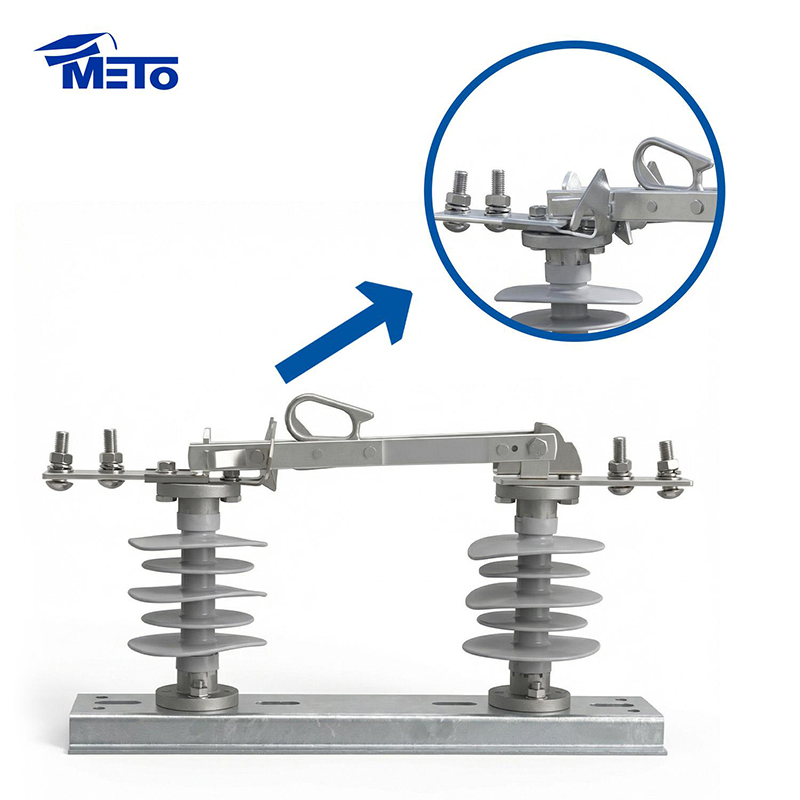
What an isolating switch does, and what it does not do?
An isolating switch is selected for electrical isolation. Its main value is not overcurrent protection. Its main value is a clear disconnect state that supports safe work on overhead medium voltage distribution lines.
This distinction is important because many buyers compare disconnect switches and fuse based equipment as if they do the same job. They do not. A disconnect switch provides the isolation point. A fuse cutout provides overcurrent protection. On many projects, both devices appear on the same line because the system needs both functions.
If your requirement is maintenance isolation, visible break, or branch line disconnection, you are discussing an isolating switch. If your requirement is fault or overcurrent protection, you are discussing fuse coordination. Good line design usually means assigning each function to the right device.
Where these switches fit in real medium voltage projects
We supply disconnect switches for outdoor pole mounted medium voltage overhead distribution. Utilities use them for 15 kV and 27 kV circuit isolation on overhead distribution networks. Engineering contractors specify them for new feeder construction and for reconstruction of aging urban and rural lines. Project owners use them where a branch feeder or outgoing line must be isolated for maintenance or outage work.
We also see regular demand from renewable energy and industrial infrastructure projects. Medium voltage distribution systems in photovoltaic plants and wind farms still need a visible isolation point on the overhead side. Industrial parks, mining areas, and rural transmission and distribution routes often rely on the same overhead line logic. The location may change, but the reason stays the same, crews need a clear and dependable way to separate part of the line for safe work.
For bulk procurement, this makes disconnect switches a common item for utilities, EPCs, and power engineering contractors. The product is simple in purpose, but it sits in a safety critical place on the line.
The two METO families we supply
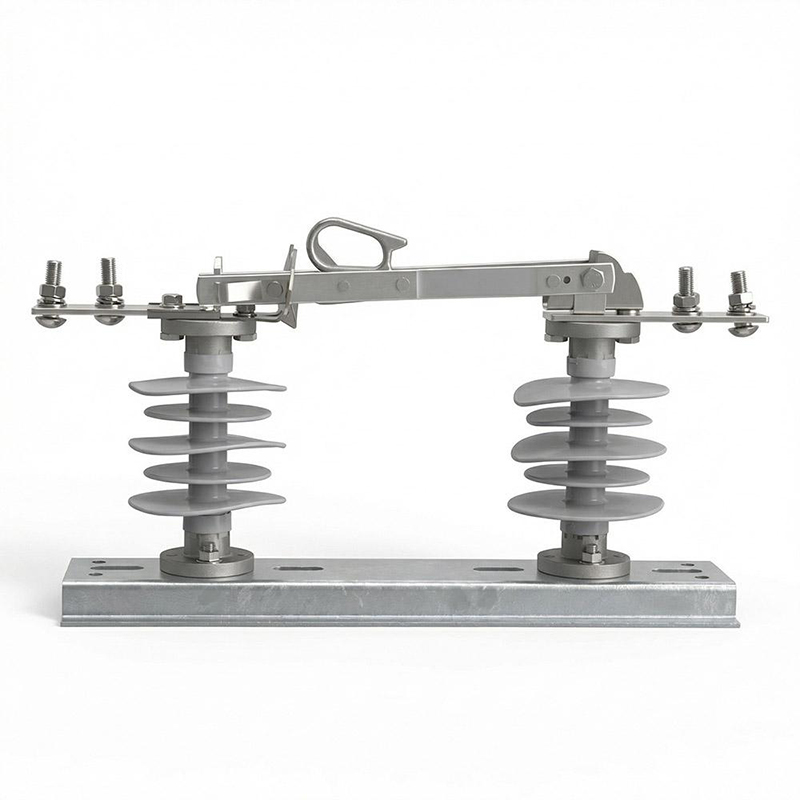
We offer two outdoor pole mounted isolating switch families for medium voltage overhead distribution, one built with composite silicone insulators and one built with porcelain insulators.
MTDC series, composite silicone insulator
Our MTDC series isolating switch includes MTDC-15-630 and MTDC-27-630. This series uses a composite silicone insulator and is designed for outdoor pole mounted disconnect duty on medium voltage overhead distribution networks. For buyers who are standardizing around a composite construction, this is the line we discuss first.
MTDP series, porcelain insulator
Our MTDP series isolating switch includes MTDP-15-630 and MTDP-27-630. This series uses a high strength porcelain insulator and serves the same core purpose, reliable power isolation on outdoor pole mounted medium voltage lines. For projects built around porcelain specifications or tender language, this is the range we recommend reviewing.
Across both families, the application is the same. These are disconnect switches for visible isolation on overhead distribution systems, not a substitute for protective fuse equipment.
How we match voltage class and project scope
We usually start selection with simple filters first. That keeps the process practical and avoids unnecessary back and forth.
Confirm whether the line is 15 kV or 27 kV
Our isolating switch range for this product group covers 15 kV and 27 kV. The first question is the system voltage of the overhead distribution line or feeder section where the switch will be installed. Once that is clear, the model range narrows quickly.
Confirm the project role of the switch
Next, we ask where the switch sits in the project. Is it isolating a feeder branch, a substation outgoing line, a section of a rural overhead network, or a medium voltage distribution segment inside a photovoltaic or wind project? The answer matters because buyers often need the switch to match a tender package, a utility bill of materials, or a repeated line design across many poles.
Confirm the procurement format
For utility and contractor orders, consistency is often as important as the single item itself. We help customers align the chosen switch family with the rest of the line material package, especially on larger projects and repeat tenders.
Composite silicone or porcelain, how we help you decide
We do not treat insulator material as a cosmetic choice. We treat it as part of the project specification. If a buyer already has a defined preference for composite silicone construction, the MTDC family is the straightforward path. If the requirement calls for porcelain, our MTDP family provides a high strength porcelain option for the same overhead isolation role.
In practice, this decision is often driven by utility standards, engineering preferences, tender language, or consistency with existing line hardware on the project. That is why we ask for the application context before we recommend a series. The best fit is the one that aligns with the customer’s line standard and procurement requirement, while still giving the visible break needed for safe maintenance isolation.
How disconnect switches work with other line equipment
On an overhead distribution line, isolation is one part of the system. We often discuss disconnect switches together with nearby devices so buyers can separate functions correctly.
If the line also needs overcurrent protection, we review the role of a MTFP series porcelain fuse cutout. The fuse cutout handles protection. The disconnect switch handles visible isolation. One device does not replace the other.
If lightning exposure is part of the line review, we may also discuss the MTLA10 series lightning protector. That device addresses surge related protection, while the disconnect switch remains the isolation point for maintenance and circuit separation.
This is also why we remind customers not to compare an overhead medium voltage isolating switch with low voltage equipment such as meter sockets or load centers. The installation level, function, and operating context are different.
A practical selection checklist
Before we quote or prepare a technical discussion, we like to confirm the items below. This keeps the switch aligned with the actual line requirement.
| Item to confirm | Why it matters | METO option or response |
| System voltage | The switch must match the overhead distribution voltage class | 15 kV or 27 kV |
| Insulator type | The project may specify composite silicone or porcelain | MTDC series or MTDP series |
| Installation style | This product is for outdoor pole mounted use | Outdoor pole mounted disconnect switch |
| Required rating | Buyers may need a stated current rating in the material list | 630A |
| Line application | The isolation point may be at a branch feeder, outgoing line, renewable MV system, or rural distribution route | We match the series to the project scope |
| Companion equipment | Isolation may be specified together with protection and surge devices | Fuse cutout, lightning arrester, and other line equipment can be reviewed together |
A short checklist saves time. If you send us the line voltage, preferred insulator material, and project type, we can usually narrow the right family quickly.
FAQ
Do isolating switches provide overcurrent protection?
No. We position an isolating switch as an isolation device. Its role is to create a visible break for maintenance and safe line separation. Overcurrent protection is handled by equipment such as fuse cutouts.
Why is a visible break important on an overhead line?
Because the line crew needs a disconnect state that can be clearly seen and confirmed in the field. That visible open point supports safer maintenance planning and branch line isolation.
How do we choose between MTDC and MTDP?
We start with your project specification. If you need a composite silicone insulator type, we review MTDC. If your project calls for porcelain, we review MTDP. Utility standards, tender requirements, and material preference usually guide the choice.
Can these switches be used in renewable energy distribution projects?
Yes. We supply them for medium voltage distribution systems in photovoltaic plants and wind farms where overhead line isolation is required.
Which models are available from METO?
Our listed models are MTDC-15-630, MTDC-27-630, MTDP-15-630, and MTDP-27-630. They are outdoor pole mounted disconnect switches for medium voltage overhead distribution networks.
Need technical datasheets or bulk quotation? Contact METO team for support.

--- END ---
In this blog
Latest Articles


Newsletter
Never miss an update by signing up to our newsletter.