

Single-Gang vs. Double-Gang Meter Sockets: What’s the Difference?
September 27, 2026Choosing a meter socket involves more than checking its amperage rating. The number of meter positions also affects the service arrangement, installation space, and wiring layout. Single-gang meter sockets are commonly used for homes with one metered service, while double-gang models are often found in duplexes and small multi-tenant buildings where separate metering is needed. The final selection depends on the property’s electrical requirements, the service configuration, and the models approved by the local utility.
What Is a Single-Gang Meter Socket?
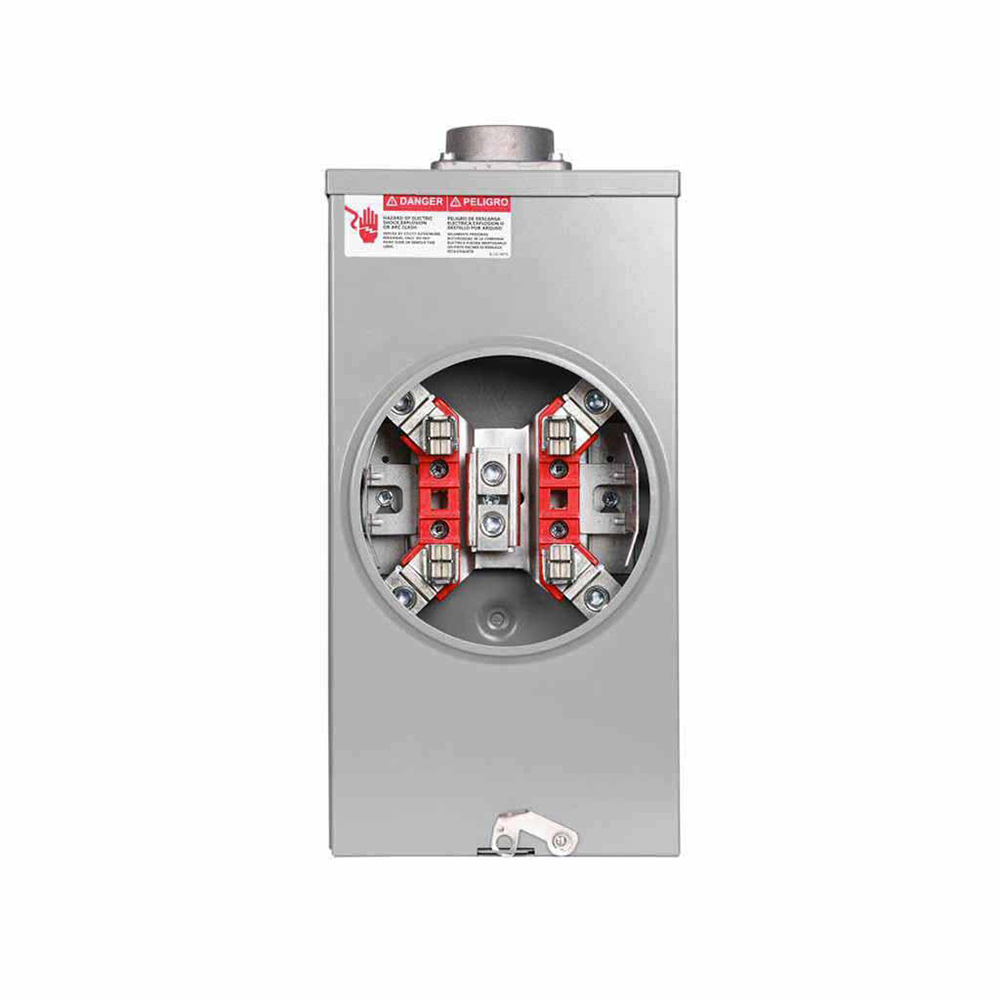
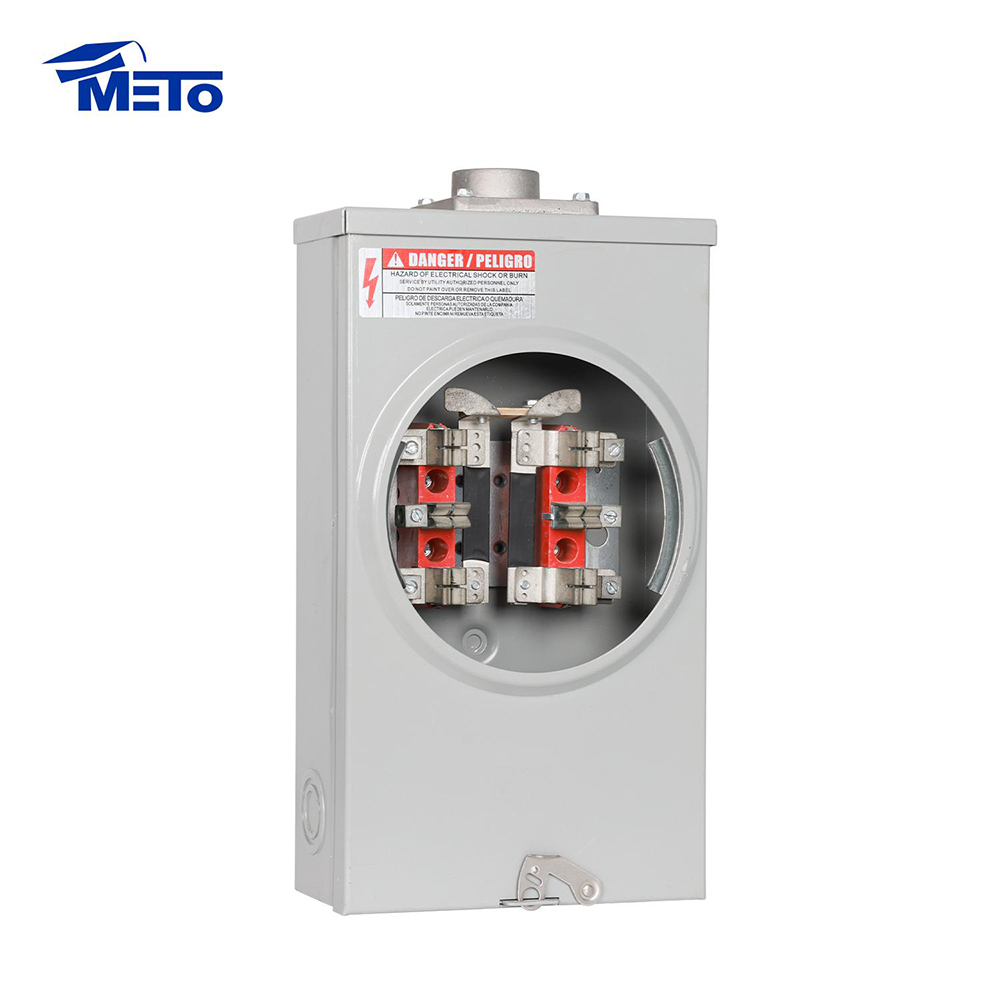
A single-gang meter socket has one position for a utility meter. Its enclosure holds the meter and provides terminals for the incoming and outgoing conductors. Depending on the model and local utility requirements, it may be ring-type or ringless, configured for overhead or underground service, and offered in different electrical ratings.
Single-position sockets are common on detached homes, workshops, small retail premises, and individual service upgrades. They take up relatively little wall space and are a practical choice when only one meter is required. Replacement work still calls for a check of the utility’s approved equipment list; an enclosure with the right general shape or amperage is not necessarily an approved replacement.
What Is a Double-Gang Meter Socket?
A double-gang meter socket, also called a two-position meter socket, accommodates two meters in one assembly. It is commonly considered for duplexes, small multi-tenant properties, and buildings where two areas are billed separately. Grouping the meters may make the service layout more organized and reduce the need for two separate enclosures.
The shared enclosure does not mean the two meter positions have unrestricted independent capacity. The ratings of the common bus, terminals, and individual positions must suit the service design. Nor does a double-gang meter socket automatically include two service disconnects or load centers. Those features depend on the particular assembly and any additional equipment specified.
Single-Gang vs. Double-Gang: A Quick Comparison
| Consideration | Single-gang | Double-gang |
|---|---|---|
| Meter positions | One | Two |
| Typical installation | One separately metered service | Two separately metered areas |
| Wall space | Usually a smaller enclosure | Usually larger, but combines two positions |
| Service ratings | Check the exact model | Check each position and common-bus rating |
| Planning focus | Utility approval and fit | Utility approval, meter spacing, and shared layout |
How the Difference Affects Installation
For a single metered service, the one-position arrangement is usually simpler to accommodate. A two-position socket becomes useful when separate billing is needed and the utility permits the meters to be grouped. The second option can make an exterior service area look tidier, but the larger assembly still needs appropriate mounting space, conductor bending room, and working clearances.
The installed cost is not determined by the socket price alone. Conduit entries, conductor routes, labor, service disconnects, and any additional equipment can change the overall cost. A double-gang assembly may be convenient for two accounts, while a property that is likely to add more metering positions may be better planned around a larger meter-center arrangement.
Ratings and Construction Matter More Than the Label
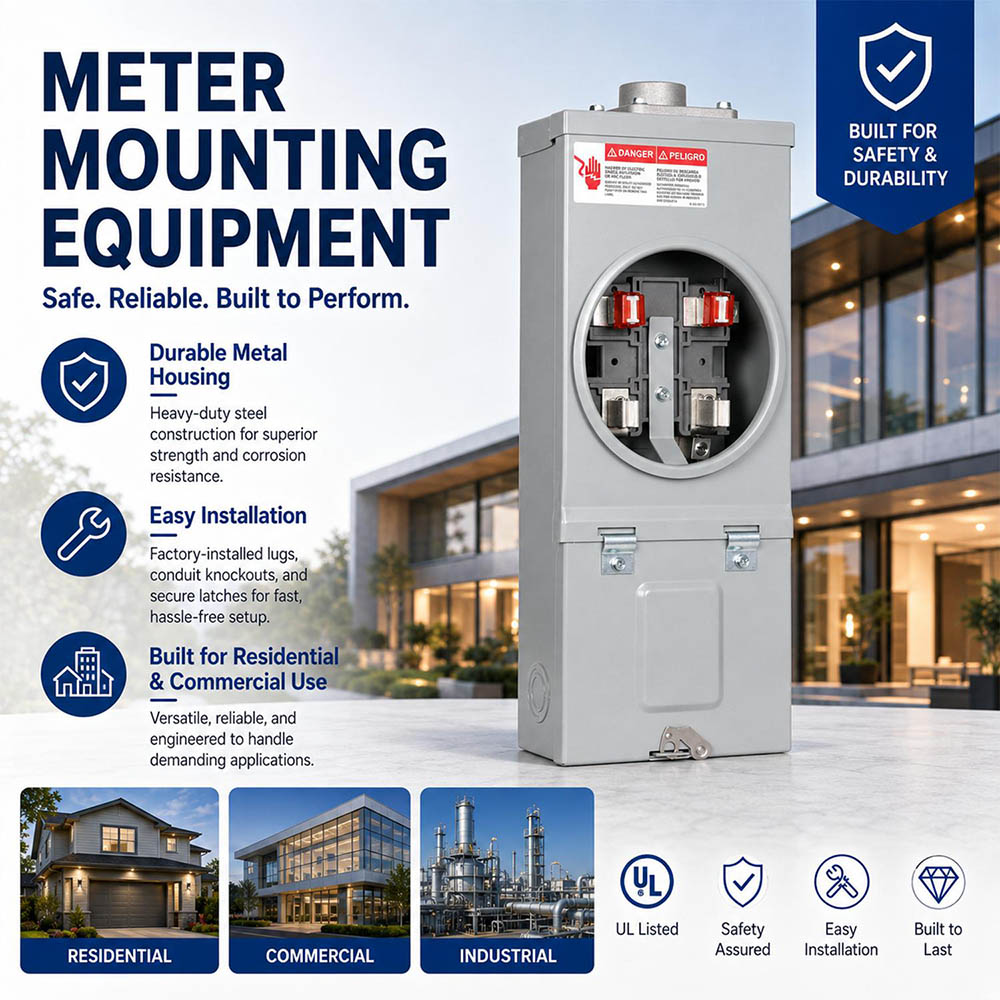
Both single- and double-gang meter sockets are available in different electrical and enclosure configurations. Specifications may include voltage, amperage, phase, number of meter jaws, ring or ringless construction, bypass provisions, hub arrangements, and permitted copper or aluminum conductor sizes. Outdoor installations also require an enclosure rating suited to the location. Check the marking and technical drawing of the exact model rather than assuming all outdoor sockets provide the same protection.
For two-position assemblies, pay particular attention to the total assembly or common-bus rating as well as the rating of each meter position. Having two meters does not automatically double the capacity of the incoming service conductors.
Choosing a Meter Socket for a North American Project
The serving utility’s meter socket specification is the best place to begin. It may prescribe approved catalog numbers, meter mounting style, jaw configuration, bypass requirements, and acceptable service arrangements. Confirm those requirements before ordering, especially when equipment is being sourced for more than one utility territory.
The electrical drawings should also establish nominal voltage, phase, conductor type and size, feed direction, service ratings, and disconnect arrangement. Review the dimensioned drawing for mounting holes, knockout locations, cable-entry space, and installation clearances. When two meters serve separate occupancies, the location and identification of each meter position should be coordinated with the service plan.
For U.S. projects, check the locally adopted National Electrical Code (NEC), utility service manual, and applicable product certifications, including UL 414 where relevant. The local authority having jurisdiction and serving utility may impose additional requirements. Final service design, load calculations, and installation should be handled by qualified electrical professionals.
What Distributors and Project Buyers Should Request
When requesting a quote for meter sockets, buyers should provide the basic project details, including the number of meter positions, installation location, local utility, and required electrical ratings. Specifications such as ringless construction, jaw configuration, bypass options, and overhead or underground feed should also be clearly stated. Providing product drawings or technical requirements helps suppliers identify suitable models and avoid compatibility issues. Before ordering, it’s worth reviewing the dimensional drawings, technical data sheets, and certification information for the selected model.
For distributors placing regular orders, keeping separate lists of approved single-gang and double-gang meter sockets can help prevent ordering mistakes. Even similar-looking models may have different mounting dimensions or utility approvals. Buyers should also check lead times, packaging options, replacement part availability, and any special labeling requirements when confirming an order.
FAQs
Can a double-gang meter socket serve two apartments?
It may be suitable for a duplex or another two-occupancy arrangement where separate utility metering is required. The utility must approve the layout and the service design.
Does a double-gang meter socket have twice the amperage?
No. The number of meter positions is not the overall assembly rating. Check the individual position ratings, common bus, and service conductors.
Can a single-gang socket be replaced with a double-gang model?
Not as a direct substitution. The proposed change may involve different service wiring, mounting dimensions, disconnect arrangements, and utility approvals. An electrical professional and the serving utility should review it.
Is a two-position socket always cheaper than two single-position sockets?
Not necessarily. The answer depends on the equipment selected and installation costs, including conductor routing, conduit work, labor, and any separate disconnect equipment.
Choosing the Right Meter Socket for Your Project
Single-gang meter sockets are commonly used for properties with one metered service, while double-gang models are suitable for installations requiring two separate meter positions. The choice depends on the service requirements, available installation space, and equipment approved by the local utility. Electrical ratings and compatibility with the project design should also be checked before ordering.
METO offers meter sockets for residential and light commercial applications. For product specifications, dimensional drawings, or assistance with model selection, contact the METO team with your project requirements and local utility specifications.

--- END ---
In this blog
Latest Articles


Newsletter
Never miss an update by signing up to our newsletter.