

How We Select a Metal Surge Arrester for Medium Voltage Overhead Distribution Systems
September 16, 2026Selecting a surge arrester for an overhead distribution project is more than choosing a standard catalog item. In utility and industrial applications, the arrester must be properly matched with the system voltage, grounding conditions, temporary overvoltage requirements, installation environment, and the insulation level of the equipment being protected.
At METO, we approach surge arrester selection as part of the overall protection coordination process. By evaluating the actual system conditions, we help utilities, rural electric cooperatives, renewable energy projects, EPC contractors, distributors, and OEM customers avoid unsuitable specifications and potential issues during operation.
For our MTLA10 Series Lightning Protector, the selection process begins with the maximum continuous operating voltage (MCOV) and temporary overvoltage conditions of the system. We then evaluate the arrester’s electrical performance, protection level, and discharge capability before reviewing installation requirements and project specifications.
This system-based approach ensures that the selected surge arrester is matched to the real application and provides reliable protection for overhead distribution networks.
Why selection starts with the system itself
Two overhead feeders can both be called 10kV class and still place different stress on an arrester. One may serve long rural spans, exposed line hardware, and pole-mounted transformers. Another may include cable transitions, switching points, or compact urban structures. That is why we do not begin with the product alone. We begin with the network.
Before we recommend an arrester, we want the system voltage, frequency, grounding method, expected fault duration, and temporary overvoltage condition. Those inputs tell us what the arrester will see in normal service and during abnormal but realistic events.
The information we ask for first
We usually ask where the arrester will be installed, what equipment is being protected, and what insulation level needs to be coordinated. A feeder exit, a transformer terminal, and a cable transition point do not present exactly the same problem. Good selection starts with the protected location, not with a shortcut.
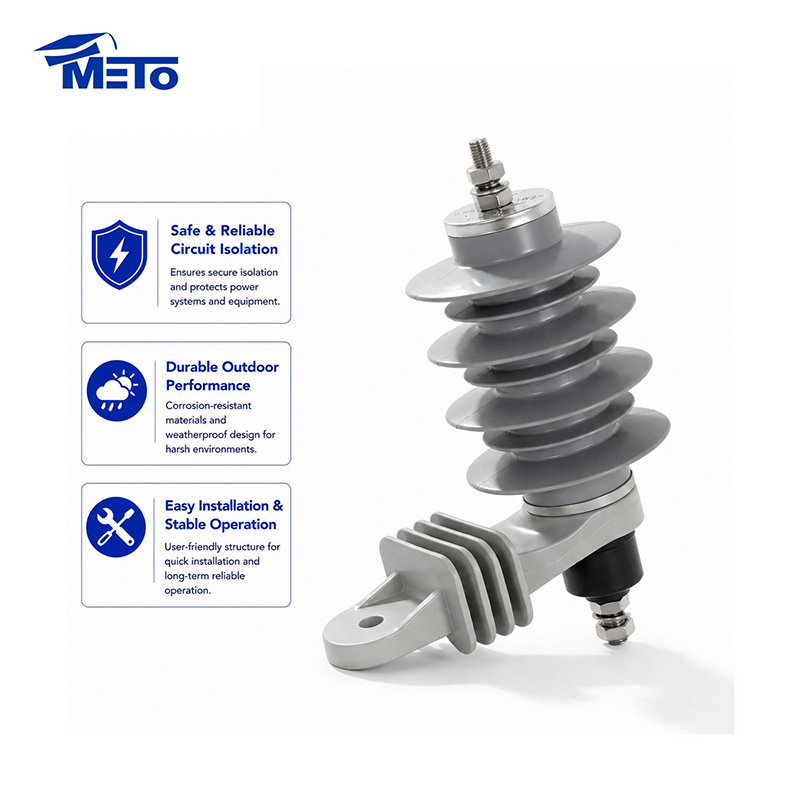
How a metal oxide surge arrester works in service
The operating principle is straightforward. Under normal conditions, the arrester remains in a high resistance state, and only a very small leakage current flows. During a surge event, the ZnO valve blocks become conductive and discharge the surge current. After the transient passes, the arrester returns to a high resistance state.
That behavior is the reason the arrester is connected between phase and ground. Its job is to limit transient overvoltage before the stress reaches the equipment insulation.
What it does not do is just as important. A surge arrester is not an overload device, not a short-circuit device, and not a visible isolation device. Keeping those roles separate makes the protection plan clearer and the purchasing specification cleaner.
Where MTLA10 fits in overhead distribution applications
Our lightning arrester solutions are built for outdoor medium voltage distribution work. The surge arrester product range includes the MTLA10 platform, a 10kV class, polymer-housed, metal-oxide surge arrester for outdoor medium voltage distribution. It uses a silicone rubber housing, includes a built-in disconnector, and is intended for lightning protection on 10kV overhead distribution lines and pole-mounted distribution transformers. We can also provide optional creepage configurations for different pollution and environmental conditions.
In customer discussions, we most often see this product family considered for distribution transformers, overhead feeders, cable transition points, substations and industrial equipment, switchgear and feeder exits, bus-connected equipment, solar PV collector lines, onshore wind medium voltage circuits, and grid renovation projects.
Use continuous phase-to-ground voltage and TOV to confirm the rating
One of the most common buying mistakes is choosing the arrester by nominal system class alone. We do not do that. We start with the highest continuous phase-to-ground voltage, because that tells us the long-term electrical stress the arrester must live with every day. Then we review the temporary overvoltage condition, because short abnormal events can still control the rating decision.
Why grounding method changes the answer
Grounding method affects the voltage seen by the arrester in both normal operation and fault-related conditions. If the grounding practice is not clearly defined, the rated voltage decision is incomplete. We also need to know how long the abnormal condition may last, because fault duration and temporary overvoltage belong in the same discussion.
When we review a project, we confirm the rated voltage from the highest continuous phase-to-ground voltage and the temporary overvoltage condition, then we check that decision against arrester capability, protection level, and discharge duty. That sequence gives buyers a more reliable basis than habit or assumption.
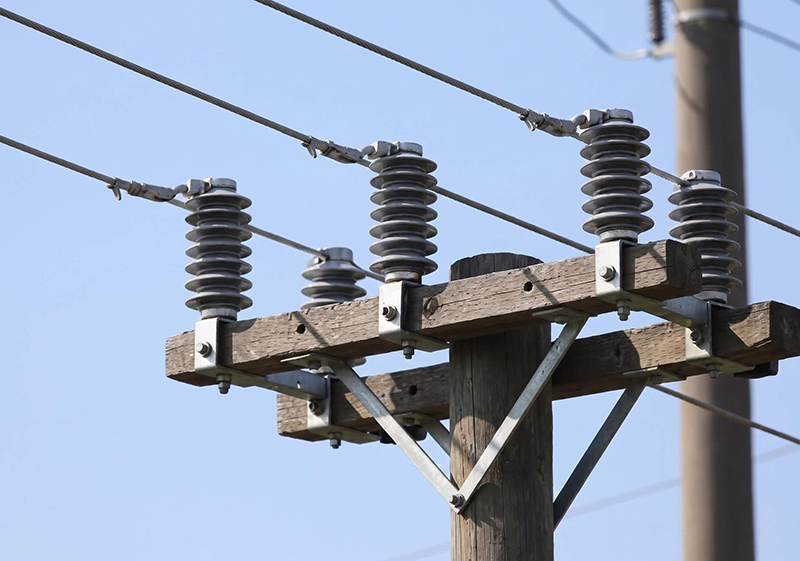
Insulation coordination is the real protection check
An arrester only creates value if its protection level coordinates with the insulation strength of the equipment being protected. This is where many specifications become too general. A line may have an arrester installed, but the actual weak point could still be a transformer terminal, a cable termination, a feeder exit, or another exposed interface.
At METO, we look at the arrester and the protected insulation as one system. That is why arrester selection often connects directly with insulator selection. Pollution severity, environmental exposure, and creepage affect the insulation side. Arrester protection level and placement affect the overvoltage side. If either side is ignored, coordination is incomplete.
Find the weakest insulation point first
The biggest asset on the pole is not always the most sensitive point. In many projects, the deciding interface is the transition from overhead line to cable, the transformer connection, or the point where outdoor equipment enters a more concentrated insulation zone. We recommend defining that exact point before finalizing the arrester location.
Match the arrester to the actual surge duty
After voltage and insulation coordination are reviewed, we look at the surge environment. Utilities and rural electric cooperatives often deal with pole-mounted transformers, sectionalizing points, exposed line hardware, and overhead to cable transitions. Renewable energy projects add their own pattern, because medium voltage collector circuits can include long cable runs, overhead sections, and switching operations. Industrial and EPC projects may place outdoor distribution equipment in dusty, polluted, humid, hot, or corrosive environments where downtime costs more than the hardware.
Locations that deserve closer review
We pay special attention to transformer terminals, feeder exits, cable transitions, and collector-system interfaces. These areas often see higher practical surge stress than a simple system label suggests. That is why we do not match an arrester to voltage class only. We match it to the line exposure and switching reality around the protected equipment.
Installation details affect the protection you actually get
A correctly selected arrester can still underperform if the installation path is poor. We recommend installing the arrester as close as practical to the protected equipment terminal or transition point, with short and direct leads and a short grounding path. During a surge, extra lead length adds unwanted voltage drop. That means the equipment may see more stress than the buyer expected from the catalog data alone.
Spacing and mounting arrangement also matter. The physical layout on the pole or structure should support a direct protective path, not a long or indirect one. Our MTLA10 uses a built-in disconnector, but even with that feature, basic installation discipline still matters. Selection and installation have to support each other.
Keep arrester duty separate from overcurrent duty
A surge arrester is there to limit transient overvoltage between phase and ground. It is not there to perform the job of an overcurrent device. In overhead distribution packages, buyers often review arresters together with a porcelain fuse cutout, but the duties are different. The arrester addresses transient overvoltage. The fuse cutout addresses overload and short-circuit protection within its own application.
That distinction matters during specification, because mixing the two functions leads to poor coordination language and the wrong expectations in the field.
What we confirm before RFQ and tender submission
The last step is documentation. Since 2009, we have focused on distribution and overhead line equipment for international markets, and we export to more than 40 countries. We are familiar with projects built around ANSI, IEEE, and IEC market requirements. We also support OEM and ODM needs for markings, accessories, labels, packaging, and project-based configuration review.
For quotations and tenders, clear inputs save time and reduce revision cycles.
| Item to confirm | Why we need it |
| System voltage and highest system voltage | Defines the application boundary |
| Frequency and grounding method | Confirms continuous operating stress |
| Fault duration and temporary overvoltage | Supports rated voltage review |
| Protected equipment and insulation level | Establishes the coordination target |
| Site environment | Helps review housing and creepage suitability |
| Installation requirements | Confirms lead path, spacing, and grounding approach |
| Documentation scope | Lets us prepare drawings, test files, and tender materials |
FAQ
What does a surge arrester do in a medium voltage overhead system?
It is a protective device connected between phase and ground to limit transient overvoltage. Under normal service it stays in a high resistance state. During a surge it conducts and discharges the surge current, then returns to a high resistance state after the transient ends.
Is a medium voltage surge arrester the same as a low voltage SPD?
No. They are different in voltage class, product structure, application method, and standards framework. A medium voltage overhead distribution arrester should be selected as part of the insulation and protection scheme for that system.
How should we choose the arrester rated voltage?
We start with the highest continuous phase-to-ground voltage, then review the grounding method and the temporary overvoltage condition. After that, we check arrester capability, protection level, and discharge duty.
What does MCOV, or Uc, mean?
It is the maximum power-frequency voltage that can be applied continuously to the arrester. In practical selection work, it connects the arrester to the actual continuous phase-to-ground voltage of the system.
Does one arrester protect an entire three-phase line?
No. One arrester does not protect an entire three-phase line by itself. Typical practice is one arrester per phase, with additional positions considered where equipment is especially exposed.
What should buyers send for quotation or tender review?
Please send the system voltage, highest system voltage, frequency, grounding method, fault duration, protected equipment and insulation level, site environment, applicable market requirements, and installation requirements. If you need drawings, test documents, customized labels, accessories, or packaging, include that as well.
Need technical datasheets or quotation support for your surge protection project? Contact METO today.

--- END ---
In this blog
Latest Articles


Newsletter
Never miss an update by signing up to our newsletter.