

What Is a Wall Switch? Types, Functions, and Selection Guide
August 10, 2026A wall switch is one of the most familiar electrical devices in a building. It allows users to control lights, ceiling fans, and other electrical loads from a convenient location on the wall. Although it appears simple from the outside, the switch plays an important role in electrical safety, energy management, and everyday convenience.
Today, wall switches are available in many configurations. Some provide basic on-and-off control, while others support dimming, motion detection, scheduling, remote access, or smart-home integration. Choosing the right wall switch therefore requires more than selecting a suitable color or design.
This guide explains what a wall switch is, how it works, the main types available, and what buyers should consider when selecting switches for residential, commercial, or industrial projects.
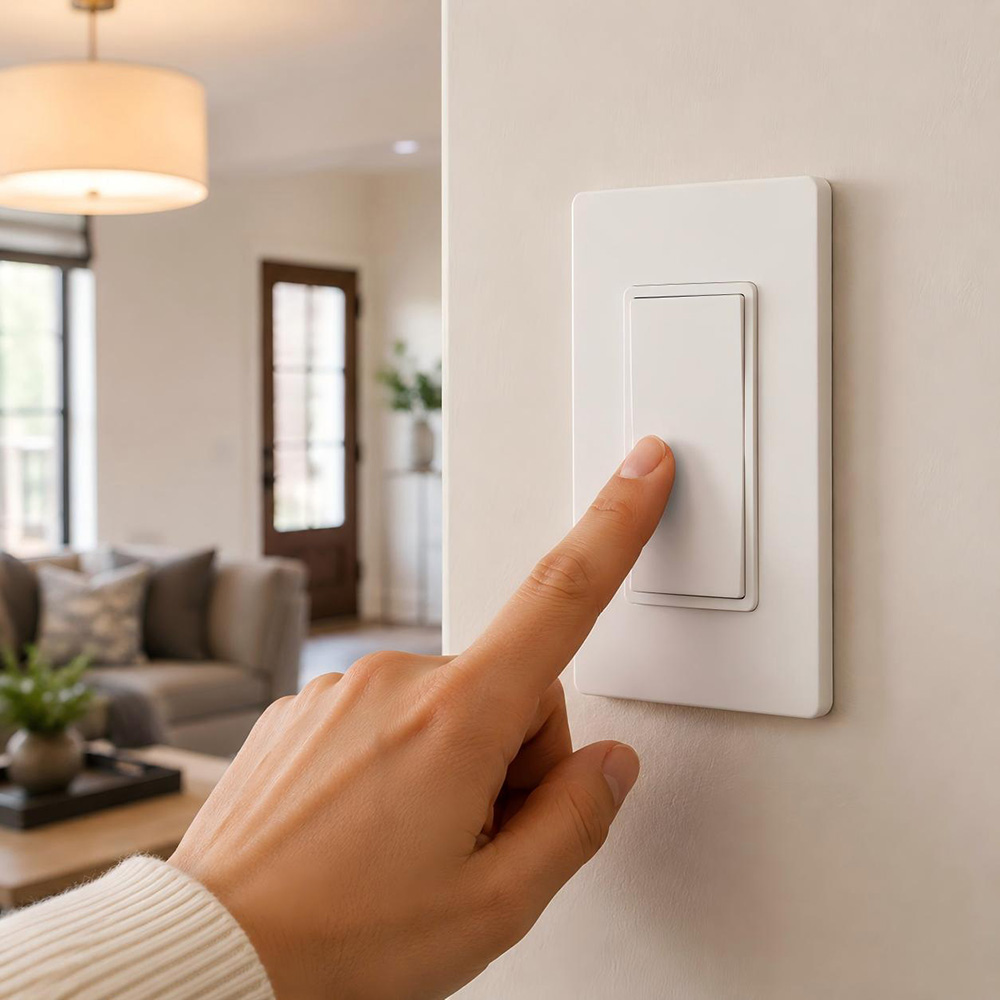
How Does a Wall Switch Work?
A traditional mechanical wall switch contains movable electrical contacts. Operating the toggle, paddle, or rocker changes the position of these contacts.
In the “on” position, the contacts connect and complete the circuit. Electrical current then travels through the switch to the light or equipment. In the “off” position, the contacts separate, breaking the circuit and stopping the flow of current.
Modern electronic wall switches work differently. Dimmers, timers, occupancy sensors, and smart switches use electronic components to regulate or automate the power supplied to the load. Some models also require a neutral wire to power their internal electronics.
Despite these differences, every wall switch has the same central purpose: controlling the operation of an electrical circuit safely and conveniently.

Main Components of a Wall Switch
A typical electrical wall switch includes several important parts:
Operating Mechanism
This is the part touched by the user, such as a toggle, rocker, paddle, button, or touch-sensitive panel. It transfers the user’s action to the internal switching mechanism.
Electrical Contacts
The contacts connect or disconnect the circuit. Their material, construction, and alignment can influence the operating life and electrical performance of the switch.
Terminals
Terminals create the connection between the switch and the building wiring. Depending on the model, a wall switch may use screw terminals, clamp terminals, push-in connections, or lead wires.
Mounting Strap
The metal or reinforced mounting strap secures the switch to the electrical box. It helps maintain correct positioning after installation.
Insulated Housing
The housing separates live electrical parts from the user and surrounding materials. Quality housings should offer dependable insulation, heat resistance, and mechanical strength.
Wall Plate
The wall plate covers the electrical box and creates a clean finished appearance. It also reduces accidental contact with the wiring area.
Common Types of Wall Switches
Different wiring systems and applications require different switch configurations. The following are some of the most common wall switch types.
Single-Pole Switch
A single-pole switch controls one light or electrical load from one location. It is widely used in bedrooms, offices, kitchens, storage rooms, and other everyday spaces. This type of switch usually has two main switching terminals, plus a grounding connection where required.
Three-Way Switch
A three-way switch allows one load to be controlled from two different locations. It is commonly installed at both ends of a hallway, at the top and bottom of a staircase, or at two entrances to a large room. Three-way switches must be installed as part of a compatible wiring arrangement.
Four-Way Switch
A four-way switch is used together with two three-way switches when a light must be controlled from three or more locations. This configuration is suitable for large rooms, long corridors, conference areas, and multi-entry commercial spaces.
Double-Pole Switch
A double-pole switch controls two conductors at the same time. It is commonly used for certain higher-power or dedicated electrical loads. Because the application may involve different voltage and current requirements, the switch rating must match the intended circuit.
Dimmer Switch
A dimmer switch adjusts the brightness of a compatible lighting load. It can improve comfort, create different lighting atmospheres, and reduce unnecessary energy use. However, not every dimmer works with every lamp. Buyers should confirm load compatibility before installation.
Occupancy and Vacancy Sensor Switch
An occupancy sensor switch can automatically turn on a light when movement is detected and turn it off after the space becomes unoccupied. A vacancy sensor generally requires the user to turn the light on manually. These are useful in spaces with irregular occupancy.
Smart Wall Switch
A smart wall switch combines traditional wall control with connected features. Depending on the model, users may control it through a mobile application, voice assistant, automation platform, or programmed schedule. Before choosing, verify wiring requirements and load compatibility.
Fan Control Switch
A fan control switch is designed to operate a ceiling fan or adjust its speed. It should be selected according to the motor load and the fan manufacturer’s requirements. A lighting dimmer should not automatically be used as a fan-speed controller.
Timer Switches
A timer switch turns a connected load on or off according to a selected time period or programmed schedule. They help automate daily operation and reduce the chance of equipment being left on unnecessarily. Timer switches are often used with:
- Bathroom exhaust fans
- Outdoor lighting
- Landscape lights
- Storage-room lighting
- Ventilation equipment
Toggle, Rocker, and Touch Switches
Wall switches are available in several operating styles, each suited to different design preferences and applications.
Toggle switches use a small lever that moves up and down. They are simple, familiar, and widely used in residential and commercial installations.
Rocker or paddle switches have a broader, flatter surface and a more modern appearance. They are commonly used in homes, offices, hotels, and other contemporary interiors.
Touch switches replace the mechanical lever with a touch-sensitive panel. They are often used in modern interiors and smart-control systems.
The operating style is mainly a matter of design and user experience. The wiring function is separate, so toggle, rocker, and other switch styles can all be available in single-pole, three-way, and other electrical configurations.
Where Are Wall Switches Used?
Wall switches are installed in almost every type of building.
Residential Buildings
Homes and apartments use wall switches for lighting, fans, ventilation, outdoor fixtures, and smart-home control.
Commercial Buildings
Offices, retail stores, hotels, restaurants, schools, and healthcare facilities may require switches with enhanced durability, convenient operation, and coordinated appearance.
Industrial Facilities
Factories, warehouses, and workshops may need switches suitable for frequent operation and demanding environmental conditions.
Hospitality Projects
Hotels and serviced apartments often use coordinated switch systems that combine lighting controls, USB charging outlets, receptacles, and other wiring devices.
The appropriate product depends on the electrical system, installation environment, expected usage frequency, and applicable local requirements.
How to Choose the Right Wall Switch
Selecting the correct wall switch helps improve safety, performance, and service life.
- Confirm the Voltage and Current Rating: The switch must be rated for the voltage and electrical load of the circuit. A product should never be selected only by its appearance.
- Identify the Wiring Configuration: Determine whether the project requires single-pole, three-way, four-way, double-pole, or another switching arrangement. Smart switches may also require a neutral conductor.
- Check the Load Type: Lighting, fan motors, and electronic equipment can behave differently. A switch designed for a basic lighting load may not be appropriate for a motor or certain LED drivers.
- Consider the Operating Environment: Indoor residential spaces have different requirements from warehouses, workshops, damp areas, or outdoor locations. Environmental conditions may affect the required enclosure, protection level, and material.
- Review Product Certifications: Importers, distributors, contractors, and project buyers should confirm that the product meets the certification and compliance requirements of the destination market.
- Evaluate Durability: Commercial projects and public buildings may require switches capable of handling frequent daily use. Contact quality, terminal construction, housing material, and mechanical design all influence long-term reliability.
- Select the Design and Color: Wall switches are visible parts of an interior. The shape, finish, color, and wall-plate style should match the project’s architectural design.
Consider Supplier Capabilities
For wholesale, distribution, construction, and OEM projects, buyers should also evaluate:
- Product consistency and quality-control procedures
- Available certifications and technical support
- Production capacity and delivery time
- Minimum order quantity and packaging options
- Logo and color customization
- After-sales response
A dependable supplier should provide clear specifications and help buyers confirm whether a switch is suitable for the intended market and application.
Safe Installation and Use of Wall Switches
Installing or replacing a wall switch involves electrical wiring, so the work should always follow local electrical codes and the manufacturer’s instructions. Before starting any installation or replacement:
- Turn off power at the distribution panel.
- Verify that the circuit is de-energized using appropriate test equipment.
- Choose the correct switch rating for the circuit and application.
- Follow the wiring diagram supplied by the manufacturer.
- Do not install damaged switches, terminals, or wall plates.
- Make sure all connections are secure and properly contained inside the electrical box.
- Call a qualified electrician if the wiring configuration is unclear or does not match the expected layout.
After installation, pay attention to warning signs such as buzzing, excessive heat, sparking, discoloration, loose operation, or a burning smell. These may indicate a poor connection, overloaded device, or other electrical problem. If any of these symptoms appear, stop using the switch and have it inspected or replaced as needed.
FAQ
Conclusion
A wall switch is a small but essential part of an electrical installation. It provides convenient control of lighting, fans, and other connected equipment while contributing to the safety and functionality of a building.
From simple single-pole switches to dimmers, sensors, and smart controls, different applications require different designs. Buyers should carefully evaluate the circuit configuration, electrical rating, load type, operating environment, certification requirements, and expected service conditions.
If you are looking for reliable wall switches for your next commercial, residential, or wholesale project, METO provides a complete range of solutions tailored to your needs. Contact our team to discuss your specifications today.

--- END ---
In this blog
Latest Articles


Newsletter
Never miss an update by signing up to our newsletter.