

What Is a Meter Socket? A Complete Guide for Electrical Buyers
August 14, 2026If you buy, specify, distribute, or install electrical equipment, the meter socket is an important part of the service connection. It provides the mounting and electrical connection point for the utility meter. This allows the meter to connect safely to the service and measure electricity use accurately.
For wholesalers, importers, distributors, utilities, contractors, and OEM buyers, choosing the right meter socket is not only about matching a current rating. You also need to consider service configuration, enclosure type, meter compatibility, local utility rules, required approvals, production consistency, lead time, and customization needs.
This guide explains what a meter socket is, how it works, the main types and components, and what you should check before sourcing meter sockets for your market or project.
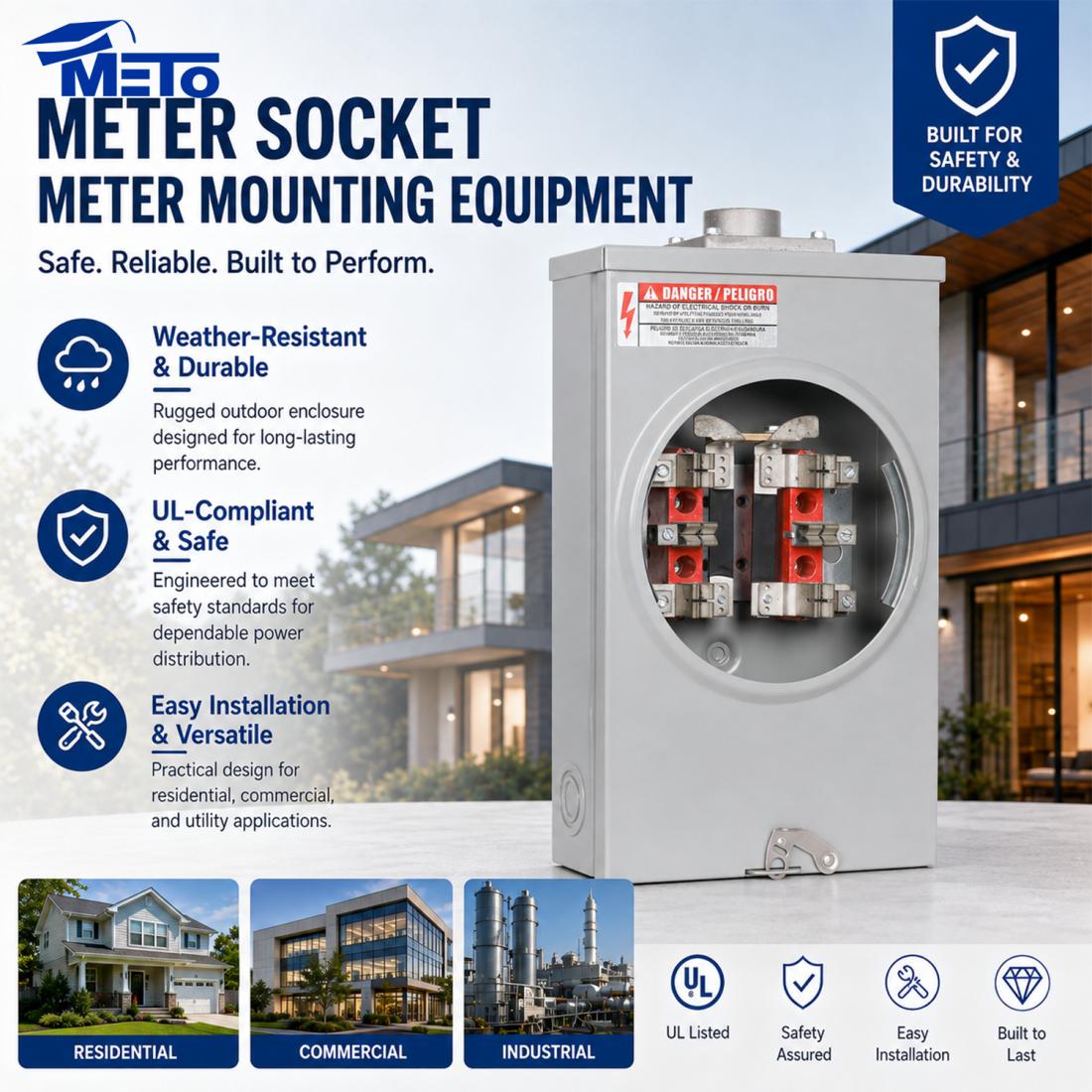
What Is a Meter Socket?
A meter socket is the electrical mounting and connection assembly that holds a plug-in electric meter. It provides the mechanical support and electrical contact points needed to connect the meter to the incoming utility supply and the customer-side electrical system.
In a typical installation, the utility meter plugs into the socket through contact jaws. The meter then measures the amount of electrical energy passing through the service. Depending on the design, the meter socket may be installed as a standalone enclosure or integrated into a larger metering or service equipment assembly.
You may also hear the term “meter base.” In everyday industry usage, meter socket and meter base are sometimes used interchangeably. However, buyers should always check the supplier’s drawing, terminal arrangement, enclosure design, and applicable utility specification instead of relying on the product name alone.

How Does a Meter Socket Work?
The meter base sits between the utility conductors, the electric meter, and the service equipment on the load side. Its terminals and meter jaws provide the electrical path needed for measurement. At the same time, the meter can still be removed for inspection, testing, replacement, or maintenance.
- Power first enters through the line side of the meter socket. The utility conductors are connected to the line terminals.
- The electric meter is then installed into the socket. Its blades fit into the meter jaws and complete the connection.
- As electricity flows through the meter, energy use is measured and recorded.
From there, power leaves through the load terminals. These terminals connect the metered service to equipment such as a main disconnect, panelboard, or other downstream service equipment.
Because the meter socket is part of the service connection, its design and installation need to match the application. Electrical ratings, conductor size, terminal connections, spacing, and enclosure type all matter.
The exact meter base configuration can vary by system. Local utility requirements and installation codes should also be checked before final selection.
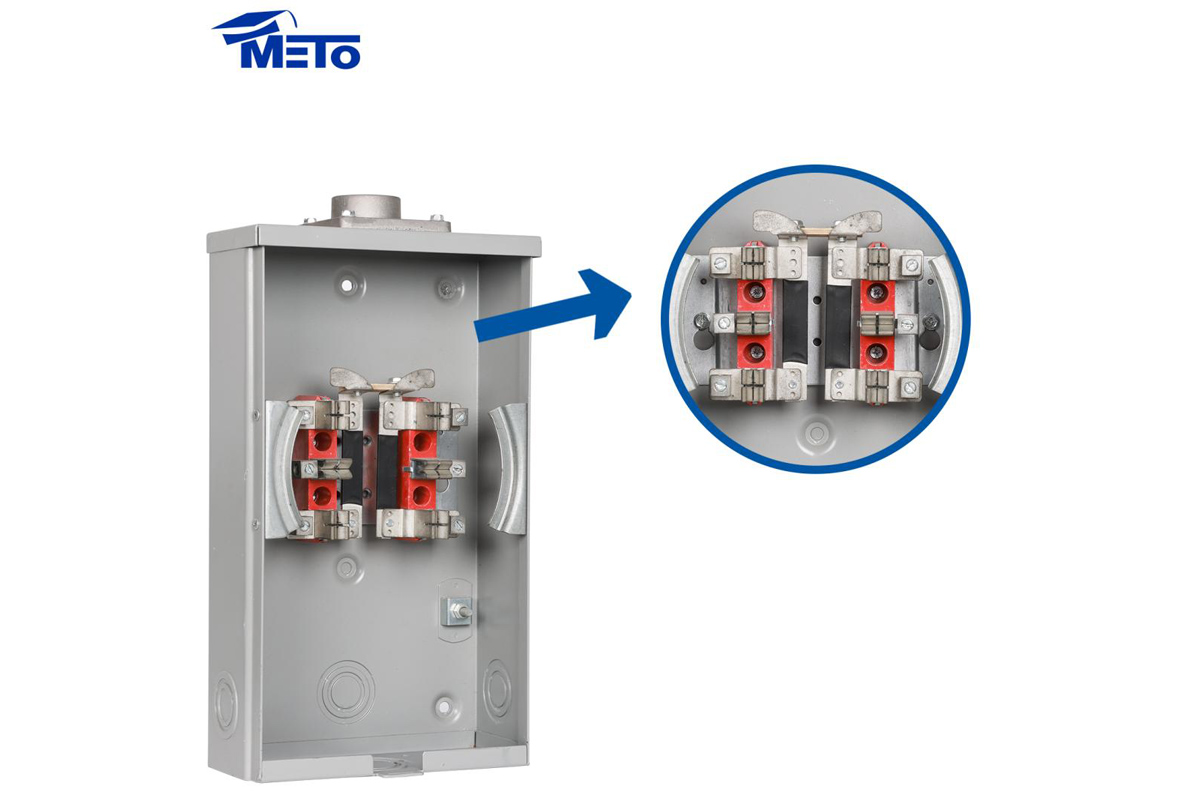
What Are the Main Components of a Meter Socket?
Enclosure
The housing protects the internal components and provides a mounting structure. Outdoor products generally require an enclosure suited to the installation environment.
Meter Jaws
The jaws receive the blades of the plug-in meter and provide the main electrical contact points.
Line Terminals
These connect the incoming utility conductors to the meter socket.
Load Terminals
These connect the metered output to the customer-side electrical system.
Insulating Supports
Insulating components separate live conductive parts and help maintain the required electrical clearances.
Grounding or Bonding Provisions
Depending on the product design and installation method, the assembly may include provisions used for grounding or bonding.
What Are the Different Types of Meter Sockets?
There is no single meter socket for every service. The correct type depends on the electrical configuration, meter style, installation environment, and local utility practice.
Single-Position Meter Sockets
Designed for one meter and commonly used where one electrical service needs one metering point.
Multi-Position Metering Assemblies
Provide multiple meter positions in one assembly and can be used for projects that require separate metering points.
Ring-Type Meter Sockets
Use a retaining ring around the meter to help secure it to the socket.
Ringless Meter Sockets
Use an enclosure cover arrangement that secures the meter without a separate retaining ring.
Indoor and Outdoor Meter Sockets
Enclosure construction differs according to where the equipment will be installed and the environmental protection required.
Different Phase and Service Configurations
Socket layouts vary according to the service arrangement. Always match the socket to the specified system and meter configuration.
Meter Socket vs. Meter Base: What’s the Difference?
The terms “meter socket” and “meter base” are often used interchangeably, but they do not always mean exactly the same thing.
A “meter socket” usually refers to the part that directly receives the electric meter. A “meter base” can refer more broadly to the complete mounting or enclosure assembly. In practice, however, manufacturers, distributors, and regional markets may use either term for similar products.
That can create confusion during sourcing. Two suppliers may use the same product name for different designs, or different names for nearly identical assemblies. For that reason, it is better to check the technical details instead of relying on the product title alone.
Key points to confirm include:
- Voltage and current ratings
- Meter jaw and terminal configuration
- Service phase and wiring configuration
- Ring-type or ringless design
- Indoor or outdoor enclosure rating
- Conductor size and terminal range
- Required approvals or utility acceptance
- Overall dimensions, mounting method, and knockout layout
Matching these specifications is the safest way to make sure the meter socket or meter base fits the intended electrical service.
Where Are Meter Sockets Used?
Meter sockets are used wherever a compatible plug-in meter needs a secure connection to an electrical service. Applications vary by country, utility system, building type, and local metering practice.
If you supply more than one region, do not assume the same meter socket will be accepted everywhere. Utility specifications and installation practices can differ significantly between markets.
How to Choose the Right Meter Socket?
Choosing the right meter socket starts with the electrical system. The destination market and utility requirements come next. Before sending an inquiry, it helps to prepare the basic technical information below.
Voltage and Current Rating
Start with the required service voltage and current. Do not choose a meter socket simply because it looks similar to an existing model. The electrical rating must match the actual application.
Service and Meter Configuration
Confirm the service configuration and the meter type being used. Check the number and arrangement of meter jaws or contacts. These details must match the meter that will be installed.
Indoor or Outdoor Installation
Consider where the meter socket will be installed. Indoor and outdoor applications may require different enclosure designs and protection levels.
Meter Compatibility
Check the meter interface, dimensions, and mounting requirements. Compatibility should be confirmed with technical data rather than appearance alone.
Conductor and Terminal Requirements
Review the conductor size and terminal capacity. Also confirm the required line and load arrangement. Where relevant, conductor material should be checked as well.
Certification and Utility Requirements
Before production, confirm the requirements of the destination market. These may include product standards, certifications, utility specifications, labeling, and supporting documents. Preparing this information in advance makes product selection faster and reduces the risk of ordering a meter socket that does not match the installation.
What Should B2B Buyers Consider When Sourcing Meter Sockets?
Product Compatibility
Share drawings, ratings, meter details, photos, or a reference sample when possible. Clear technical communication reduces the risk of mismatched products.
Quality Consistency
Ask how the supplier controls incoming materials, assembly, critical dimensions, terminal quality, and final inspection across production batches.
Minimum Order Quantity (MOQ)
Confirm the minimum order quantity for standard products and for customized versions. OEM changes may require different production quantities.
Lead Time
Separate sample lead time from mass-production lead time and confirm what happens when the product requires customized parts, packaging, or labels.
OEM and Customization Capability
If you need branding, packaging, enclosure changes, terminal changes, labels, or other modifications, define the requested scope early so feasibility can be evaluated.
Frequently Asked Questions About Meter Sockets
Its main purpose is to provide the mounting and electrical connection point for a compatible electric meter. It connects the utility side and load side through the meter so electricity use can be measured.
The terms are often used interchangeably, but usage varies by supplier and market. Always verify the technical drawing, enclosure, terminal arrangement, ratings, and meter interface before ordering.
Start with the service voltage and current rating, meter and jaw configuration, phase or service arrangement, installation environment, conductor requirements, and local utility or approval requirements.
Not automatically. Metering practices, utility specifications, standards, enclosure expectations, and meter formats can vary. Confirm the requirements of each destination market.
Provide the required rating, service configuration, meter or jaw arrangement, indoor/outdoor requirement, quantity, target market, certification or utility requirements, conductor information, and any drawings, photos, samples, packaging, or OEM needs.
METO can review B2B customization requirements for meter-related products. Send your technical specifications, drawings or reference sample, required quantity, target market, labels or branding needs, and expected delivery schedule so feasibility can be evaluated.
Conclusion

--- END ---
In this blog
Latest Articles


Newsletter
Never miss an update by signing up to our newsletter.