

How Do Circuit Breakers Work? A Complete Guide to Electrical Protection
November 1, 2026Circuit breakers are essential components of modern electrical systems. From residential homes and commercial buildings to industrial facilities and power distribution networks, these devices help protect electrical circuits from dangerous conditions such as overloads and short circuits.
But how do circuit breakers work? What happens inside a circuit breaker when an electrical fault occurs? And how do you choose the right circuit breaker for your electrical application?
In this guide, we will explain the working principle of circuit breakers, their main components, different types, and their applications in North American electrical systems.
What Is a Circuit Breaker?
A circuit breaker is an automatic electrical safety device designed to interrupt the flow of electricity when a fault or abnormal electrical condition occurs.
Unlike a traditional fuse, which must be replaced after it operates, most circuit breakers can be reset and used again once the cause of the fault has been identified and corrected.
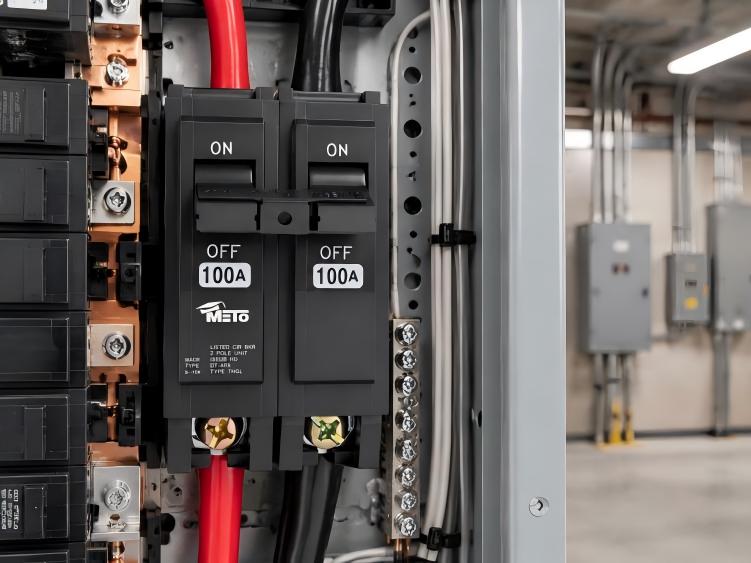
Circuit breakers are commonly installed in electrical panels, load centers, distribution boards, and industrial control systems.
Their primary functions include:
- Protecting electrical circuits from overload conditions.
- Interrupting current during short circuits.
- Reducing the risk of electrical equipment damage.
- Helping prevent overheating in electrical wiring.
- Providing a convenient way to manually switch electrical circuits on and off.
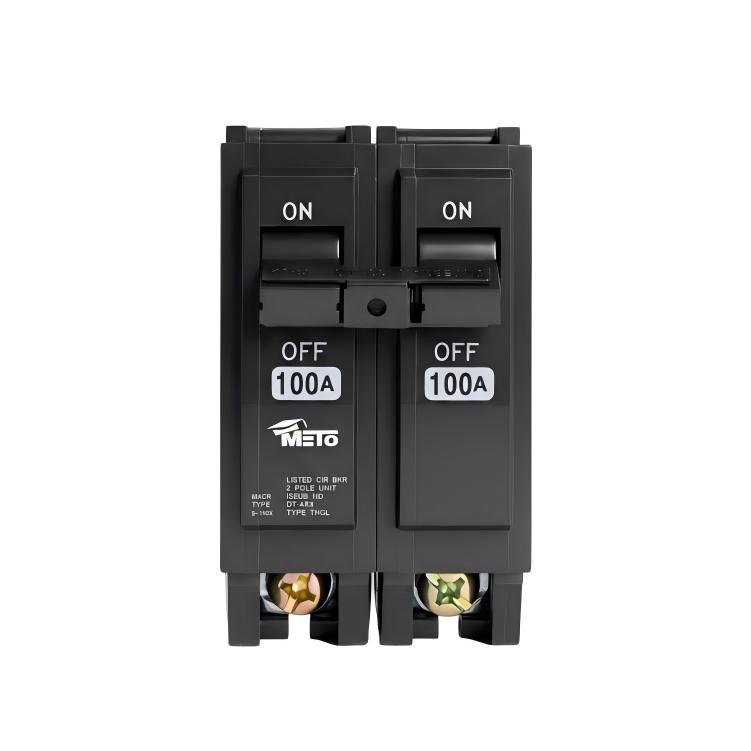
For residential applications in the United States and Canada, circuit breakers are commonly installed inside load centers or electrical distribution panels to protect individual branch circuits.
How Do Circuit Breakers Work?
The basic working principle of a circuit breaker is simple: it continuously monitors electrical current and automatically disconnects a circuit when the current exceeds its designed protection limits.
Under normal operating conditions, electrical current flows through the circuit breaker without interruption. When an overload or short circuit occurs, the breaker’s internal trip mechanism activates and separates its electrical contacts.
This action stops the current from flowing through the protected circuit.
Most conventional residential and commercial circuit breakers use a thermal-magnetic trip mechanism.
1: Normal Current Flow
When an electrical circuit operates normally, current flows through the circuit breaker’s internal contacts.
The contacts remain closed, allowing electricity to reach connected appliances, lighting systems, outlets, and other electrical equipment.
As long as the current stays within the breaker’s rated operating limits, the circuit breaker remains in the ON position.
2: Detecting an Overload
An overload occurs when a circuit draws more current than it is designed to carry.
For example, connecting too many electrical appliances to one branch circuit may cause the current to exceed the circuit breaker’s rated capacity.
In a thermal-magnetic circuit breaker, the thermal protection mechanism uses a bimetallic strip that heats up as current increases.
When excessive current continues flowing, the bimetallic strip bends due to heat and activates the trip mechanism.
The circuit breaker then opens its contacts and interrupts the electrical supply.
3: Detecting a Short Circuit
A short circuit occurs when electrical current takes an unintended low-resistance path, causing a sudden and extremely high current flow.
This can happen when damaged insulation allows conductors to make unwanted contact or when wiring faults occur.
The magnetic protection mechanism responds to this sudden current increase.
A magnetic coil inside the circuit breaker generates a strong magnetic force, which activates the trip mechanism almost instantly.
This rapid interruption helps limit the energy released during a short-circuit event and protects wiring and connected equipment.
4: Interrupting the Electrical Current
When the trip mechanism activates, the internal contacts separate.
As the contacts open, an electrical arc may form between them. Circuit breakers are designed with arc-control structures to help extinguish this arc and safely interrupt the current.
The design of the arc-extinguishing system depends on the circuit breaker’s type, voltage rating, and application.
5: Resetting the Circuit Breaker
After a circuit breaker trips, the handle typically moves to the TRIPPED position or another intermediate position, depending on its design.
Before resetting it, the user should identify and correct the underlying electrical problem.
Once the fault has been resolved, the circuit breaker can generally be reset according to the manufacturer’s instructions.
A breaker that trips repeatedly should not be forced to remain ON. A qualified electrician should investigate the cause.
Main Components of a Circuit Breaker
Understanding the main components helps explain how circuit breakers provide reliable electrical protection.
The contacts connect and disconnect the electrical circuit. They remain closed during normal operation and separate when the breaker trips.
The operating mechanism controls the opening and closing of the contacts. It allows manual switching and automatic tripping.
The thermal element detects sustained overcurrent conditions. In many conventional breakers, it uses a bimetallic strip that bends when heated.
The magnetic element responds to high fault currents, particularly short circuits, by activating the trip mechanism rapidly.
The arc chamber helps control and extinguish the electrical arc generated when contacts separate under load or fault conditions.
The trip mechanism releases the operating mechanism when an abnormal current condition is detected, causing the contacts to open.
Different Types of Circuit Breakers
Circuit breakers are available in different designs to meet the requirements of residential, commercial, and industrial electrical systems.
Miniature Circuit Breakers (MCB)
Miniature Circuit Breakers are commonly used in residential and light commercial applications.
They provide protection against overloads and short circuits and are typically installed in electrical distribution panels.
Molded Case Circuit Breakers (MCCB)
Molded Case Circuit Breakers are designed for applications requiring higher current ratings and greater protection flexibility.
They are widely used in commercial buildings, industrial facilities, and power distribution systems.
Ground Fault Circuit Interrupters (GFCI)
GFCI protection is designed to detect imbalances between outgoing and returning current and quickly interrupt the circuit when a ground fault is detected.
GFCI protection is especially important in locations where electrical equipment may come into contact with water, such as kitchens, bathrooms, garages, and outdoor areas.
Arc Fault Circuit Interrupters (AFCI)
AFCI devices are designed to detect certain dangerous electrical arcing conditions that may lead to electrical fires.
They are used in residential electrical systems where arc-fault protection is required by applicable electrical codes.
Air Circuit Breakers (ACB)
Air Circuit Breakers are commonly used in low-voltage power distribution systems, particularly in commercial and industrial applications.
They are designed to handle higher current levels and provide advanced protection and switching functions.
Why Are Circuit Breakers Important in North American Electrical Systems?
Electrical safety is a major consideration in residential, commercial, and industrial construction throughout the United States and Canada.
Circuit breakers play an important role in protecting electrical installations and maintaining reliable power distribution.
Here are four key benefits:
Circuit breakers help prevent electrical wiring from overheating when excessive current flows through a circuit for too long.
They rapidly interrupt high fault currents to help reduce the risk of damage to electrical equipment and wiring.
Properly selected circuit breakers help protect appliances, machinery, lighting systems, and other connected electrical loads.
Circuit breakers provide a practical method for manually disconnecting electrical circuits during maintenance, troubleshooting, and equipment replacement.
In North America, electrical installations must follow applicable local codes and standards. In the United States, the National Electrical Code (NEC) provides important installation requirements. Canadian installations are generally governed by the Canadian Electrical Code (CEC) and applicable provincial requirements.
Product certification and suitability should also be verified for the intended application.
How to Choose the Right Circuit Breaker?
Selecting the correct circuit breaker is essential for electrical safety and system performance.
For electrical contractors, distributors, wholesalers, and project buyers, several factors should be considered.
Choose a breaker with a current rating appropriate for the protected circuit, conductor ampacity, and connected load.
Ensure the breaker’s voltage rating is suitable for the electrical system where it will be installed.
The interrupting rating must be sufficient for the available fault current at the installation point.
Common configurations include single-pole, double-pole, and three-pole circuit breakers, depending on the electrical system and application.
Determine whether the application requires a standard thermal-magnetic breaker, an AFCI, GFCI, MCCB, or another specialized protection device.
For the North American market, verify applicable UL or CSA certification, product listings, panel compatibility, and local code requirements.
Working with a reliable circuit breaker manufacturer can also help distributors and contractors maintain consistent product quality and supply.
Common Applications of Circuit Breakers
Circuit breakers are used in almost every type of electrical installation.
Typical applications include:
- Residential buildings: Protecting lighting circuits, receptacle circuits, appliances, and other household electrical loads.
- Commercial buildings: Providing circuit protection for offices, retail spaces, lighting systems, and HVAC equipment.
- Industrial facilities: Protecting motors, machinery, electrical distribution equipment, and production systems.
- Data centers: Supporting electrical distribution and protection for critical power infrastructure.
- Utility and distribution systems: Providing switching and protection functions in suitable power distribution equipment.
The specific breaker type and rating depend on the electrical system design and application requirements.
Conclusion: Reliable Circuit Protection Starts with the Right Breaker
So, how do circuit breakers work?
They monitor electrical current and automatically interrupt the circuit when overloads, short circuits, or other specified fault conditions occur. Through thermal, magnetic, electronic, or specialized sensing mechanisms, circuit breakers help protect electrical wiring, equipment, and distribution systems.
Choosing the right circuit breaker requires careful consideration of current rating, voltage rating, interrupting capacity, application, and applicable safety standards.
For electrical contractors, distributors, and wholesale buyers in North America, selecting reliable circuit protection products is an important step toward building safer and more dependable electrical systems.
Looking for dependable circuit breaker solutions for your electrical distribution projects?
Explore METO’s circuit breaker products and contact our team for product specifications, technical information, and customized supply solutions.
Frequently Asked Questions (FAQs)
Q1: What causes a circuit breaker to trip?
A circuit breaker may trip because of an electrical overload, short circuit, ground fault, arc fault, or another condition detected by its protection mechanism.
Q2: Can a circuit breaker be reused after tripping?
Most conventional circuit breakers can be reset and reused after the underlying fault has been identified and corrected, provided the breaker has not been damaged.
Q3: What is the difference between a circuit breaker and a fuse?
Both devices protect electrical circuits from excessive current. A fuse operates by melting its internal element and must generally be replaced, while most circuit breakers can be reset after tripping.
Q4: How long does a circuit breaker last?
The service life depends on product quality, operating conditions, environmental factors, and the number and severity of switching or fault events. Follow the manufacturer’s maintenance and replacement recommendations.
Q5: What is the difference between MCB and MCCB?
MCBs are generally used for lower-current residential and light commercial circuits, while MCCBs are designed for higher-current applications and often provide more adjustable protection options.
Q6: Are circuit breakers required in North American homes?
Circuit breakers are widely used in North American residential electrical panels. Specific protection requirements depend on the applicable NEC or CEC provisions, local regulations, and the installation type.

--- END ---
In this blog
Latest Articles


Newsletter
Never miss an update by signing up to our newsletter.
By submitting, you agree to our Privacy Policy and Terms of Use. See also our Cookie Policy. To request deletion of your data, email info@chinameto.com.